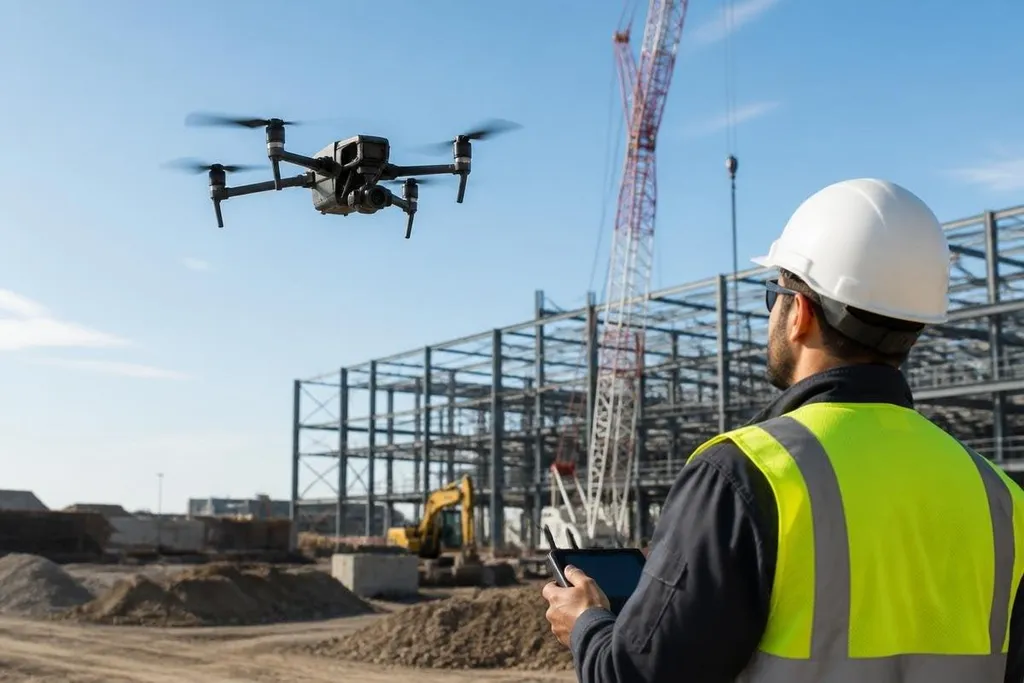
A robotic drone can inspect a roof, map a worksite, or carry a camera into a dangerous area without putting a person there first. Its value grows when the task is repetitive, hard to reach, or unsafe to check by hand.
- Remote flight keeps people away from hazards.
- Sensors turn a flight into useful site data.
- Human review still matters when the result affects safety or repairs.
The work a robotic drone can do
This system combines a flying platform with sensors, software, and a control link. The software can hold a route, avoid some obstacles, record images, and send the data to a person on the ground.
That changes the job from watching a pilot fly to checking the result. A worker can compare images from different inspections, mark a damaged section, or send a repair team to a specific location instead of searching the whole site.
The same setup works across several tasks. Drones can inspect power lines, scan construction areas, check crops, search damaged buildings, and watch large outdoor sites.
The hardware changes by task: a thermal camera helps find heat changes, while a high-resolution camera shows cracks, loose parts, or surface damage.
This is where robotic drones become more useful than ordinary remote-control aircraft. A remote pilot controls each movement. A robotic drone can handle parts of the route, leaving the operator to watch the surroundings and judge the data.
Why automation matters
A drone can reach a high structure without scaffolding or a long climb. It can also repeat the same route, which makes later inspections easier to compare. Those gains matter when a site is spread out or when access takes more time than the inspection itself.
Autonomy also helps when several aircraft or ground teams share the same work area. Route planning can reduce needless flight, while geofencing keeps the drone inside a set boundary. A human still needs to set the task, check the plan, and respond when the system meets something it doesn't recognize.
A drone can fly a planned route and still leave a worker with hours of checking before anyone can act. Robot24 connects the flight to the field job it supports, which matters when a buyer is judging whether the data saves a site visit or creates another desk task. The useful test is whether the aircraft changes work on the ground.
I think that shift from flight hardware to useful work is the strongest reason to take robotic drones seriously.
The limits are practical
Flight time restricts how long a drone can work before it needs a battery change or a recharge. Wind, rain, dust, poor lighting, and weak network links can also reduce the quality of a flight or the data it records.
Sensors create another limit. A camera may show a damaged panel, but it may not tell you whether the panel needs repair. A thermal image can show a heat pattern, but a worker still needs to check the cause. Human review remains part of the process.
Rules matter too. A company may need permission to fly in a given area, keep the drone away from people, or maintain a direct link with the aircraft. The exact rules depend on the location and the task, so a technical plan needs a legal check before flights begin.
The business case can fail when a drone produces more footage than a team can review. Storage, software, training, maintenance, insurance, and staff time belong in the budget beside the aircraft and its sensors.
A buying checklist
Before choosing a robotic drone for work, check these points:
- Define the task: name the result you need, such as an inspection record or a site map.
- Check the sensor: match the camera or scanner to the fault you need to find.
- Plan for control: confirm how the drone handles lost links, blocked routes, and low battery.
- Measure review time: estimate how long a worker needs to check each flight.
- Confirm local rules: get the required permissions before the first outdoor test.
- Budget the full system: include batteries, software, repairs, training, and data storage.
A good trial should start with one repeatable task and a clear pass condition. If the drone finds the same type of fault faster or with less exposure to danger, the case for wider use gets stronger. If the team cannot review the data, more flights will not fix the problem.
The next useful measure is simple: how many safe, usable decisions does one flight produce, and what does each decision cost?